
Gear • Night Diving • Redundancy
Dive Lights: Primary, Backup and Beacon Choices
A dive light is simple until darkness, signalling and redundancy make it part of the plan rather than just another gadget.
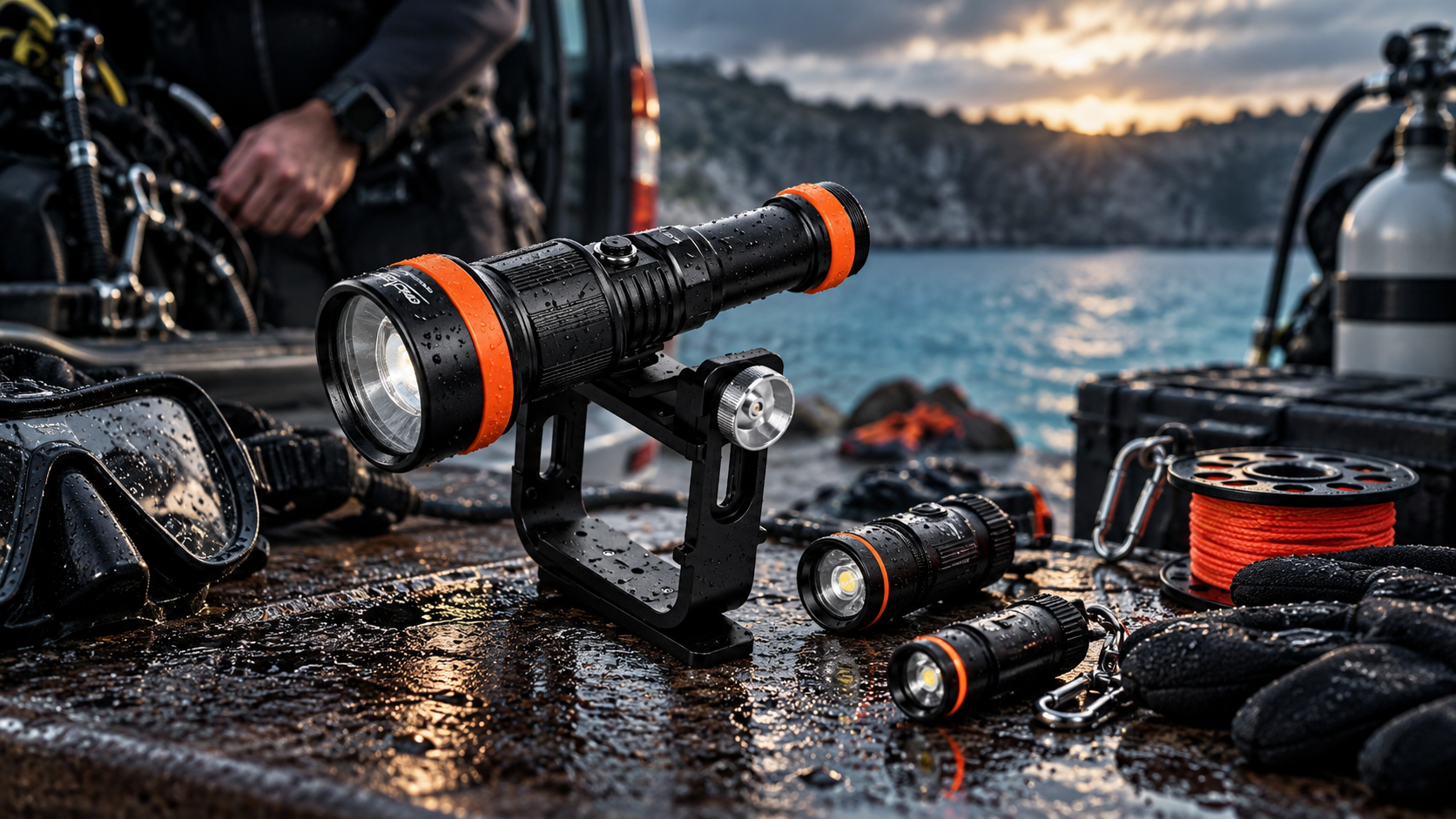
My current primary is the ZD710
Recently I have been using the ZD710 on a Goodman handle as my main light for recreational diving.
For the sort of dives I am doing now, it is a very comfortable setup.
The handle keeps the light where I want it without turning one hand into a permanent torch holder, and the light easily covers the roughly 60-minute recreational dives that make up most of my current use.
The best primary light is not the one with the biggest specification sheet. It is the one that fits the dive I am actually doing.
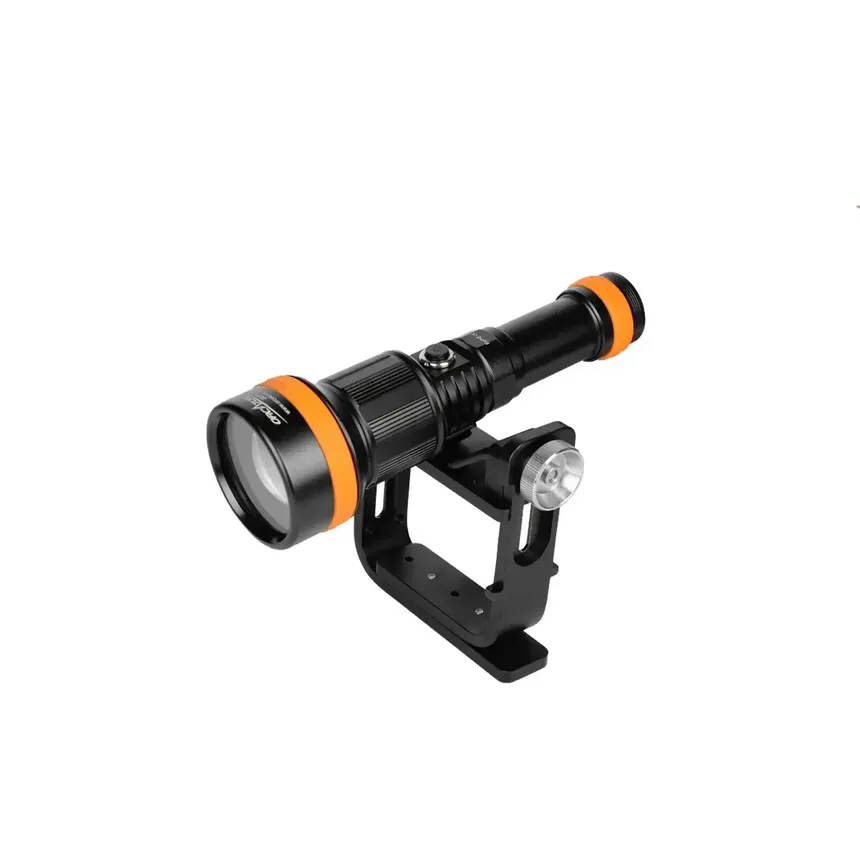
The Goodman handle changed how useful the light feels
I like being able to use my hand while still having the light aligned with it.
That matters for clipping things off, checking gauges, handling a spool or just communicating without constantly swapping a torch between hands.
It also makes the light feel like part of the configuration rather than something I happen to be carrying.
Backups are boring until they are not
I carry backup lights because the failure mode is obvious.
If the primary stops working on a daylight dive, that may just be annoying. On a night dive or somewhere the light is genuinely part of orientation and communication, it matters a lot more.
My current backups include an orange OrcaTorch backup and four HiCloud dive torches in the wider kit pool.
I do not need all of them clipped to me on every dive, but having multiple working lights available makes it much easier to build the redundancy appropriate to the dive.
Beacons have a different job
I also use small beacons as part of the wider lighting kit.
I do not see them as a substitute for a torch. Their value is visibility and identification rather than illuminating the reef.
That distinction matters because “light” is really several different jobs: seeing, being seen and signalling.
Technical diving may change the equation
As I move toward technical diving, longer runtimes and decompression stops are going to change what I ask from the primary light.
I may well go back to a canister light for that kind of diving, with the ZD710 moving into the backup role.
That would not mean the ZD710 suddenly became inadequate. It would mean the dive became longer and the consequences of losing the primary became more important.
I am trying to build systems, not collect torches
It is very easy with dive kit to buy another gadget because another gadget exists.
I am trying to think in roles instead:
- What is my primary?
- What is my independent backup?
- How long does the planned dive require the system to work?
- How am I using light for communication?
- What changes when the dive becomes longer or more complex?
That is a much more useful way for me to decide what comes with me.
Right now the ZD710 on the Goodman handle fits my recreational diving very well.
As the diving changes, the lighting system can change with it.
The goal is not more lumens. It is dependable light for the dive I planned.
Leave a Reply
You must be logged in to post a comment.