Marine Life • Reef Keeping • Diver Perspective
Keeping Reef Tanks Changed How I Look at Reefs
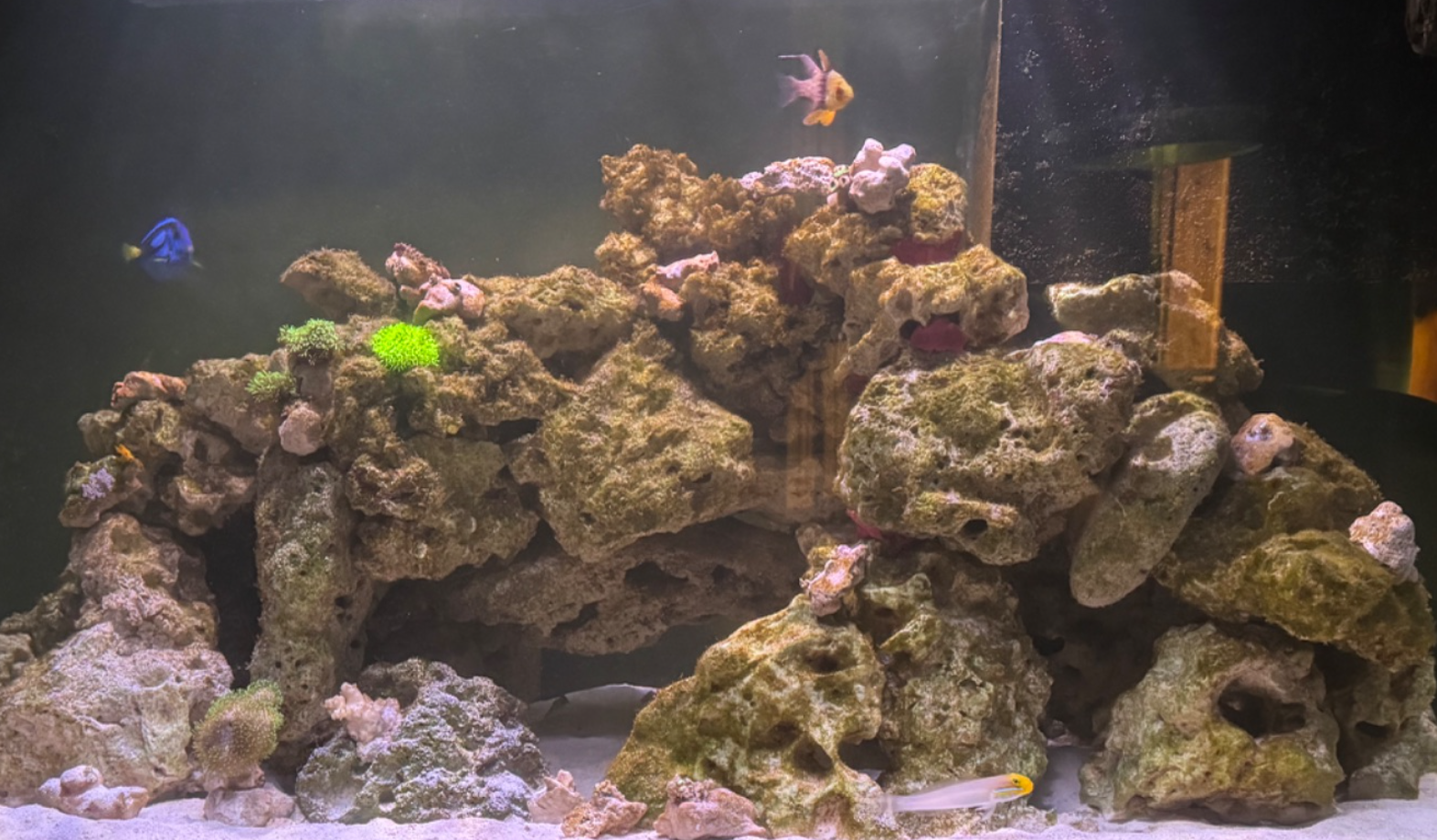
Owning a reef tank has made me look at the sea less like scenery and more like a living system.
I often feel like I am keeping water
People look at a marine aquarium and naturally see the fish and corals first. I do too.
But after keeping reef tanks for long enough, I have ended up with a slightly different way of thinking about them.
Quite often it feels like I am keeping water that just happens to have fish and corals in it.
The animals are the reason for doing it, obviously, but the water is the thing that makes everything else possible. Temperature, salinity, nutrients, alkalinity, calcium, flow, light, filtration and the biological cycle all interact. You can have a beautiful aquascape and expensive equipment, but if the environment is wrong the animals still have to live in it.
The reef is not just the things swimming over it. It is the whole system they depend on.
Small changes stop looking small
One of the biggest lessons my tanks have taught me is how little it can take for coral growth to slow down.
A parameter drifting out of the range my system is happy with does not necessarily produce some dramatic instant disaster. Sometimes the first sign is simply that something stops thriving quite as well.
That experience inevitably follows me underwater. When I look at a natural reef I find myself thinking about the water around it as much as the coral itself.
It is also why sewage, rubbish and avoidable pollution bother me so much. If I can see in a closed aquarium how sensitive coral growth can be to changing conditions, it is difficult not to ask why we would casually add more stress to the real environment.
Fish are much smarter than they get credit for
Keeping marine fish has also destroyed the idea that they are little colourful automatons.
They learn routines. They learn who is approaching the tank. They associate people with food, maintenance and interaction. Different individuals of the same species can behave completely differently.
I have had fish that are confident, fish that are cautious, fish that seem permanently offended by the existence of everybody else, and fish that appear to know exactly what I am doing before I do it.
Once you spend enough time watching that at home, fish underwater stop becoming anonymous scenery. I find myself watching how an individual is behaving, what it is guarding, where it retreats and what it is reacting to.
A fish ID card tells me what something is. Watching a fish tells me who it is behaving like.
The ugly stuff taught me just as much
Reef keeping is not all fluorescent coral and perfect photographs.
I have had to learn about algae, pests, nutrient problems, the nitrogen cycle, water chemistry and the less glamorous biological processes that keep a small marine system functioning.
That has probably made me more interested in the messy parts of a natural reef too. Algae is not automatically just an ugly patch to swim past. Tiny organisms in rockwork matter. Grazers matter. Detritus has a story. What looks like empty rock often is not empty at all.
The aquarium hobby teaches patience because there is rarely a useful instant fix. You observe, test, change something carefully and watch what happens.
AOW Fish ID suddenly felt very familiar
When I did Fish ID as part of my Advanced Open Water course, I found it surprisingly comfortable.
That was not because I had somehow memorised every fish in the sea. I absolutely have not.
It was because aquarium keeping had already dragged me down the rabbit hole of fish taxonomy. Thinking in families, body shapes, behaviour and identifying features felt familiar rather than new.
The result is that the Fish ID dive felt less like learning an entirely new skill and more like taking something I already enjoyed and applying it in the environment where those animals actually belong.
The reef aquarium has made the real reef bigger
I do not think keeping an aquarium makes me an expert on wild reefs. A glass box in a house is not the ocean and aquarium husbandry is not the same thing as reef ecology.
What it has done is make me more curious.
I notice more. I ask more questions. I am more interested in the relationship between the water, the coral, the algae, the invertebrates and the fish rather than only looking for the biggest animal in front of me.
That has made diving richer for me.
My reef tanks have not made the ocean feel smaller or more familiar.
They have made me realise how much more there is to notice.
The more I learn to look after a few hundred litres of seawater, the more respect I have for the real thing.