Training Notes • Human Factors • Rescue Diver
What Rescue Diver Changed for Me
Rescue did not make me feel heroic. It made me more confident to act, more aware of others, and more determined to become a better buddy.
Rescue Diver changed something important in my head.
It gave me permission to act. Not perfectly. Not heroically. Just usefully.
Before Rescue, part of my brain treated help as something that had to be perfect before it was allowed. If I could not do it exactly right, there was a fear that I might make things worse. That fear was not theoretical for me. I am a large person, and there was always a little voice in my head saying that if I grabbed someone, moved someone, or even performed CPR, I could hurt them more.
Rescue helped reframe that. It did not make me careless. It made me realise that careful action is still action — and in an emergency, useful help given is better than perfect help withheld.
Useful help beats perfect help withheld
That idea became the centre of the course for me.
I did not come away thinking, “I can now rescue anyone from anything.” That would be the wrong lesson. What I did come away with was the confidence that I could do something. I could start. I could assess. I could call for help. I could support someone. I could begin the process of getting a diver to safety.
For the ASD side of my brain, that mattered a lot.
My brain likes correctness. It likes clear rules. It likes knowing the right answer before acting. That can be useful in diving, but in an emergency it can also create hesitation. Rescue helped me understand that the aim is not perfection. The aim is to provide useful assistance until more help arrives.
That distinction changed everything.
Repetition made action feel possible
The repetition mattered.
It was not just theory or a single run-through. Repeatedly rescuing a real person — with Hanna, one of the Divemasters, acting as an unconscious diver — helped move the skill from “I understand this” into “I can actually do this.”
CPR was the same.
At first, James, the instructor, watched my depth and pace closely. He corrected the details and made sure the compressions were right. Later, he simply watched and said it was perfect.
That mattered more than he probably realised.
James also works in the NHS and as an Emergency Department doctor, so it did not feel like a generic “well done.” It felt like meaningful confirmation from someone who genuinely understands what effective emergency care should look like.
That helped quiet the part of my brain that worried I would hurt someone by trying to help them. Rescue did not remove the seriousness of it. It made action feel possible.
Seeing problems before they become rescues
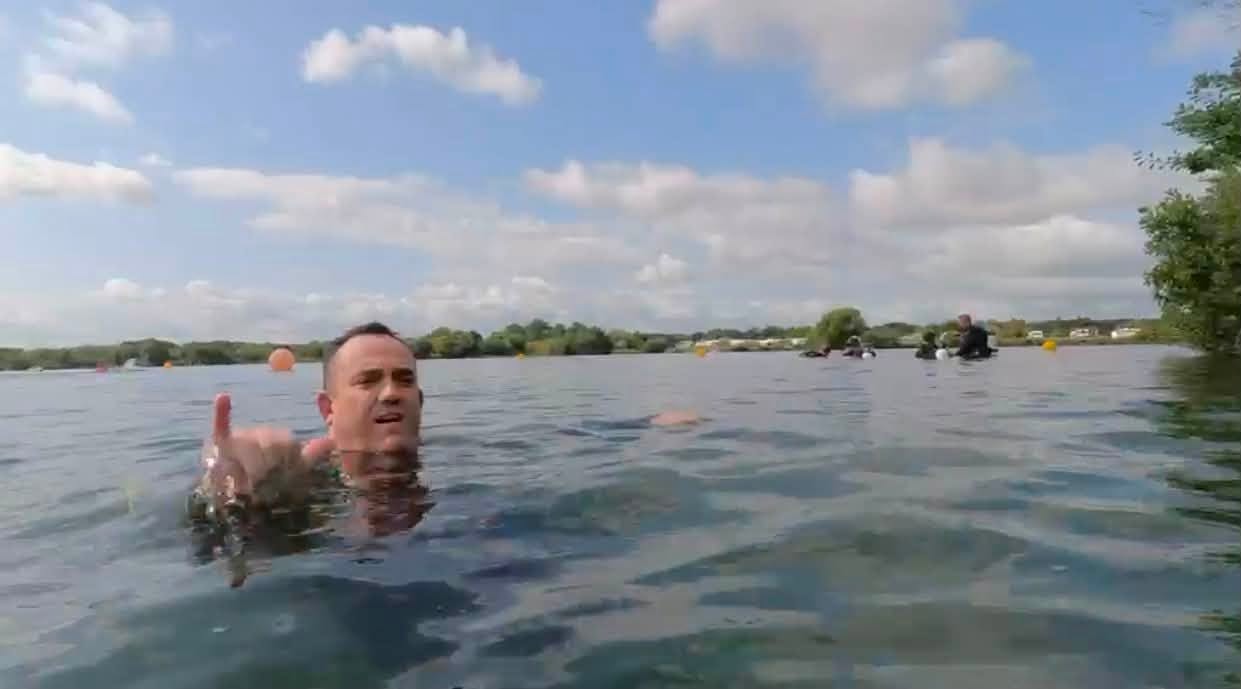
Rescue also changed what I notice before something becomes a rescue.
My situational awareness grew, but so did my confidence to actually approach someone. Sometimes the useful first step is not dramatic. It is not jumping in, grabbing someone, or launching into a full rescue scenario. Sometimes it is simply walking over and saying:
“Hey, how are you doing?”
That sounds small, but for me it is not.
With ASD, reading feelings in other people has not always been easy. Seeing anxiety, fear, hesitation or overload is something I am still learning. I am sure I will get it mixed up sometimes. I may check in with someone who is completely fine.
But if my worst-case mistake is that I ask someone if they are okay and accidentally make a new friend, I can live with that.
The hardest scenario was personal
The hardest part of the course was the faux rescue with Gemma.
We had already spent the morning doing rescue swims and scenarios, so I was tired before it even started. Then the scenario became Gemma — my wife — needing rescue, and that hit differently.
Even though it was training, emotionally it landed harder. There was a part of me that was simply determined to save her.
Afterwards, once the emotion settled, I realised something important: I could do it.
Tired, loaded, emotionally invested, and still able to work through the problem.
That mattered for my confidence. It made the idea of the Divemaster solo rescue feel more realistic. Not easy. Not something to take lightly. But possible.
Teamwork gives you time to think
I have often been the sort of person who works out how to do things solo. Real life, gaming, problem-solving — my instinct is usually to figure out the route and make it work.
Rescue challenged that in a useful way.
Physically, I know I can move people. With my background and size, and with previous field-medic style training around evacuation carries, there is a part of me that thinks, “I can just pick them up and get them out.”
But Rescue taught me that being able to do something solo does not mean solo is the best option.
Getting other people involved gives you time and capacity. It lets someone manage kit, someone call for help, someone watch the casualty, someone prepare the exit, someone bring oxygen, someone think ahead.
It turns a chain of reactions into a managed response.
That is a big lesson for me: teamwork gives you space to stop, think and act, rather than every action being a reaction.
Fitness, stamina and technique
Rescue also made something very clear: cardio and stamina matter more than raw strength.
Strength helps, of course. But rescue is not just about overpowering a problem. You do not always have to drag someone the hardest way possible. You can roll a person. You can use buoyancy. You can use the team. You can use technique. You can make the problem smaller.
That is an important lesson, especially for divers who worry they are not strong enough, graceful enough, fit enough, or calm enough.
The point of Rescue is not to turn you into a superhero. The point is to give you a framework so that when something happens, your brain has somewhere to go.
EFR helps with that too. It gives the emergency care side a structure rather than leaving your brain to invent one under pressure.
Not perfection — assistance
The course helped me understand that rescue is not about perfection.
It is about giving assistance until medical services can get there. That is when the professionals take over and the perfection — or as close as real life gets to it — belongs to them.
Until then, the useful thing is to act within your training, keep thinking, get help involved, and do the next right thing.
And then keep practising.
Rescue skills are not something you learn once and put on a shelf. They need repetition. They need refreshing. They need to feel familiar enough that when your brain is loaded, cold, tired or stressed, there is still a pathway to follow.
A better buddy
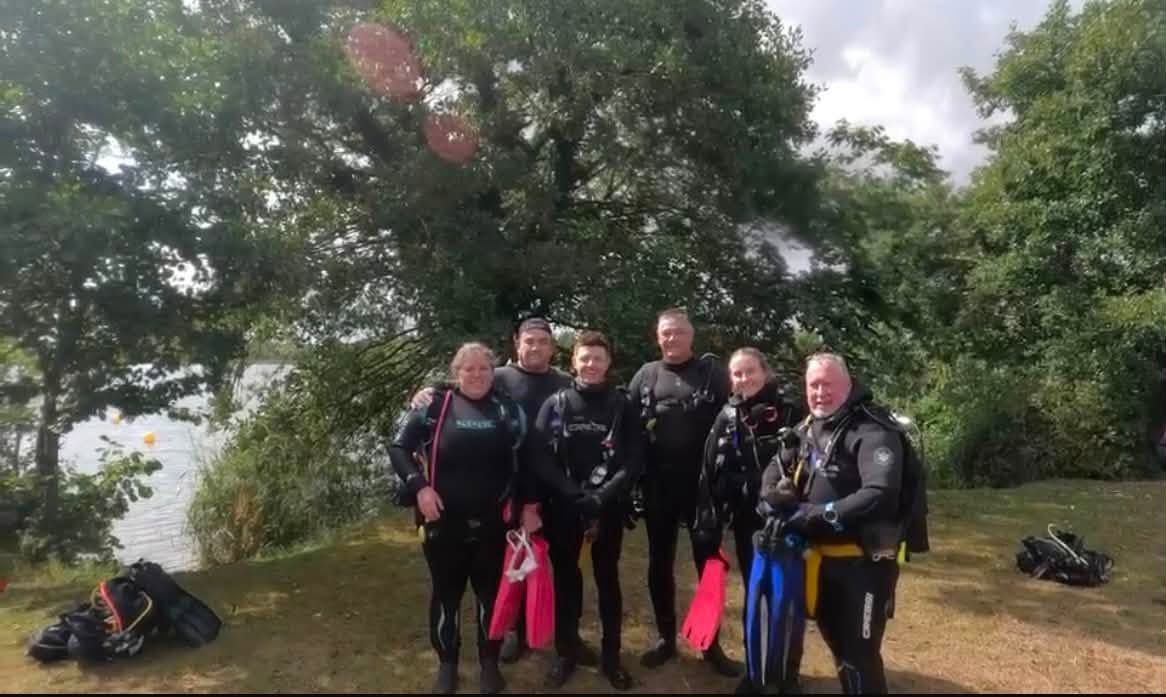
The biggest change Rescue gave me was not that I suddenly became fast, heroic or fearless.
It made me slower in the right way.
I am more confident now, but that confidence is not about charging in. It is about being able to pause, read the situation, and choose the next useful action.
Slower does not mean passive. Slower means deliberate.
Notice what is happening. Check the person. Check the team. Check the environment. Get help involved. Use the tools, training and people around you. Then do the next useful thing.
Rescue did not teach me to be perfect. It taught me that useful help matters, that teamwork matters, and that action guided by thought is better than panic guided by reaction.
That is the lesson I want to carry forward into every dive:
Stop. Think. Assess. Then act.