Tag: UK Diving

  • Quarries vs Sea Dives: What Each Teaches

    Quarries vs Sea Dives: What Each Teaches

    UK Diving • Dive Sites • Learning

    Quarries vs Sea Dives: What Each Teaches

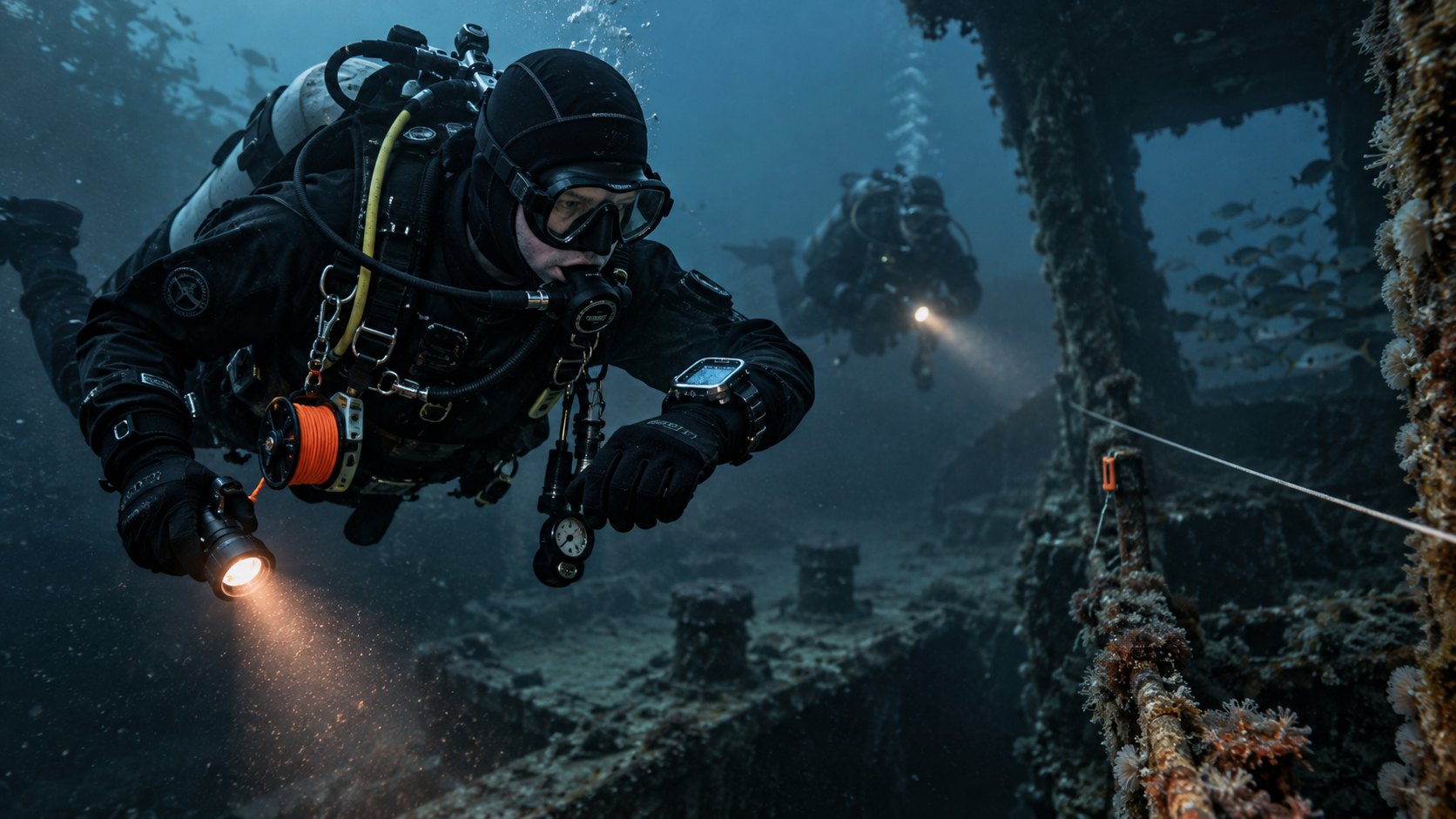
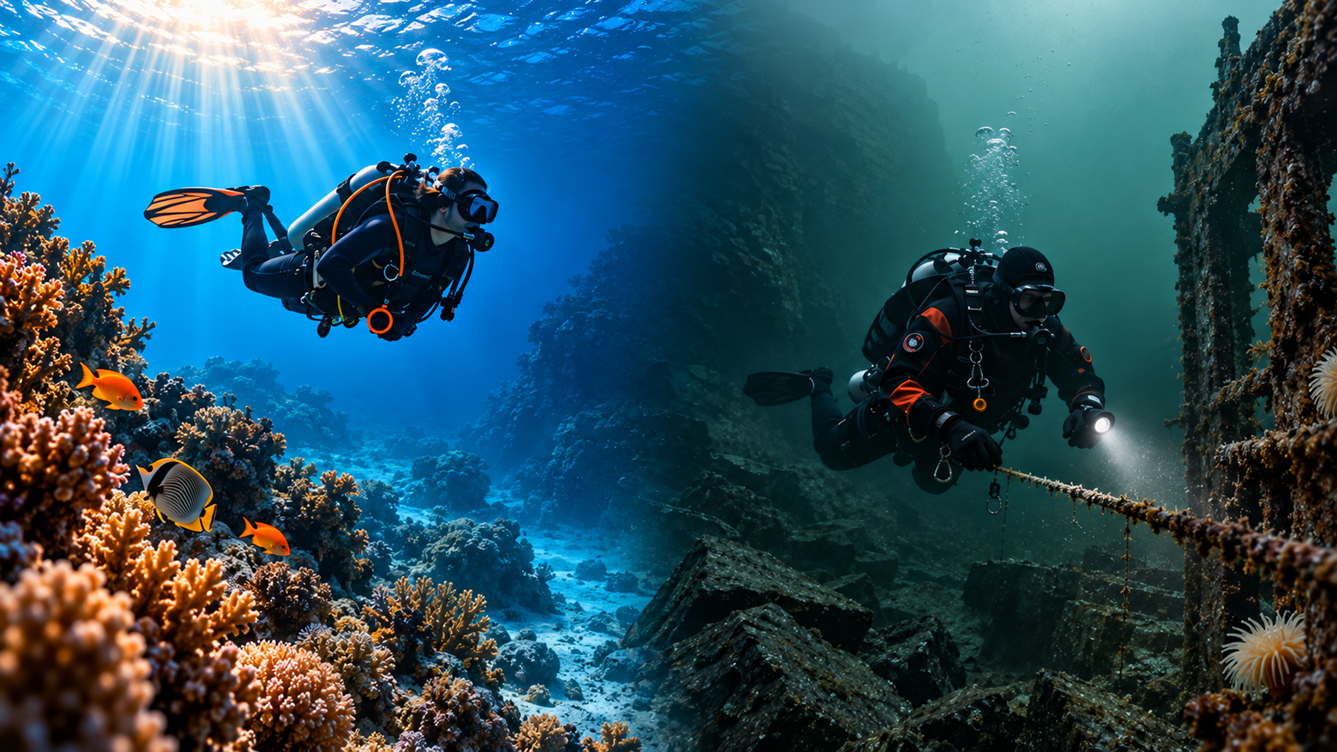
    I do not see quarries as fake diving or the sea as automatically better. They give me different problems to solve.

    Quarries are where I can make things boring

    I actually like quarry diving.

    That does not mean I think a quarry is the same thing as the sea.

    Its biggest strength is often the opposite: it removes variables.

    Known entry points, no tide, generally predictable navigation and a familiar shore setup make it much easier to repeat a skill until it becomes boring.

    That is incredibly useful for training.

    A quarry is not valuable because it imitates the sea perfectly. It is valuable because it lets me practise without the sea changing the exam paper halfway through.

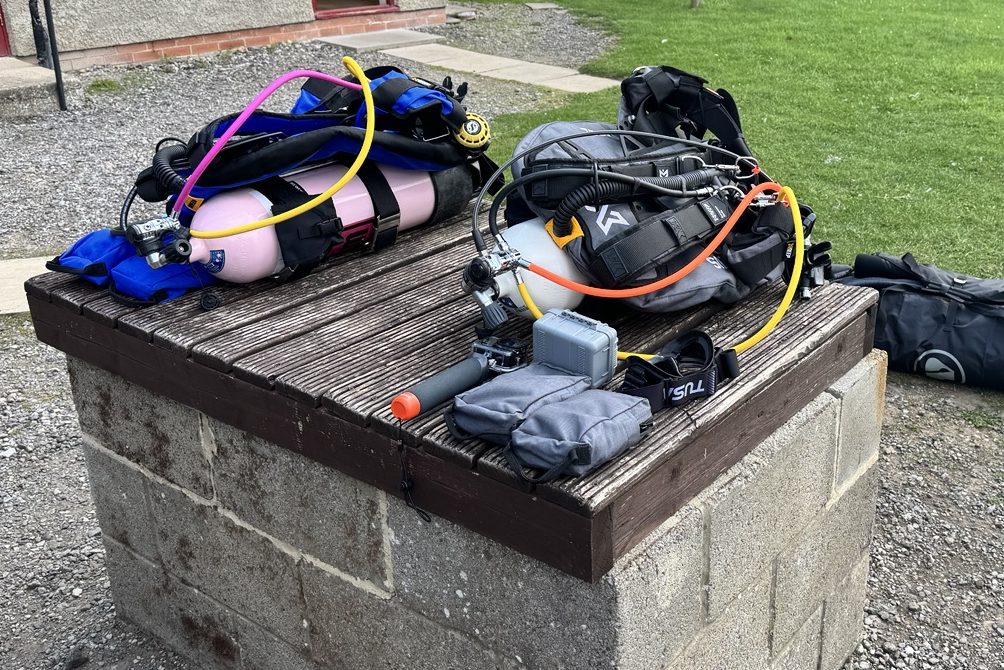
    Scuba gear prepared at an inland dive site
    Inland sites give me a controlled place to repeat skills, configuration and the basics.
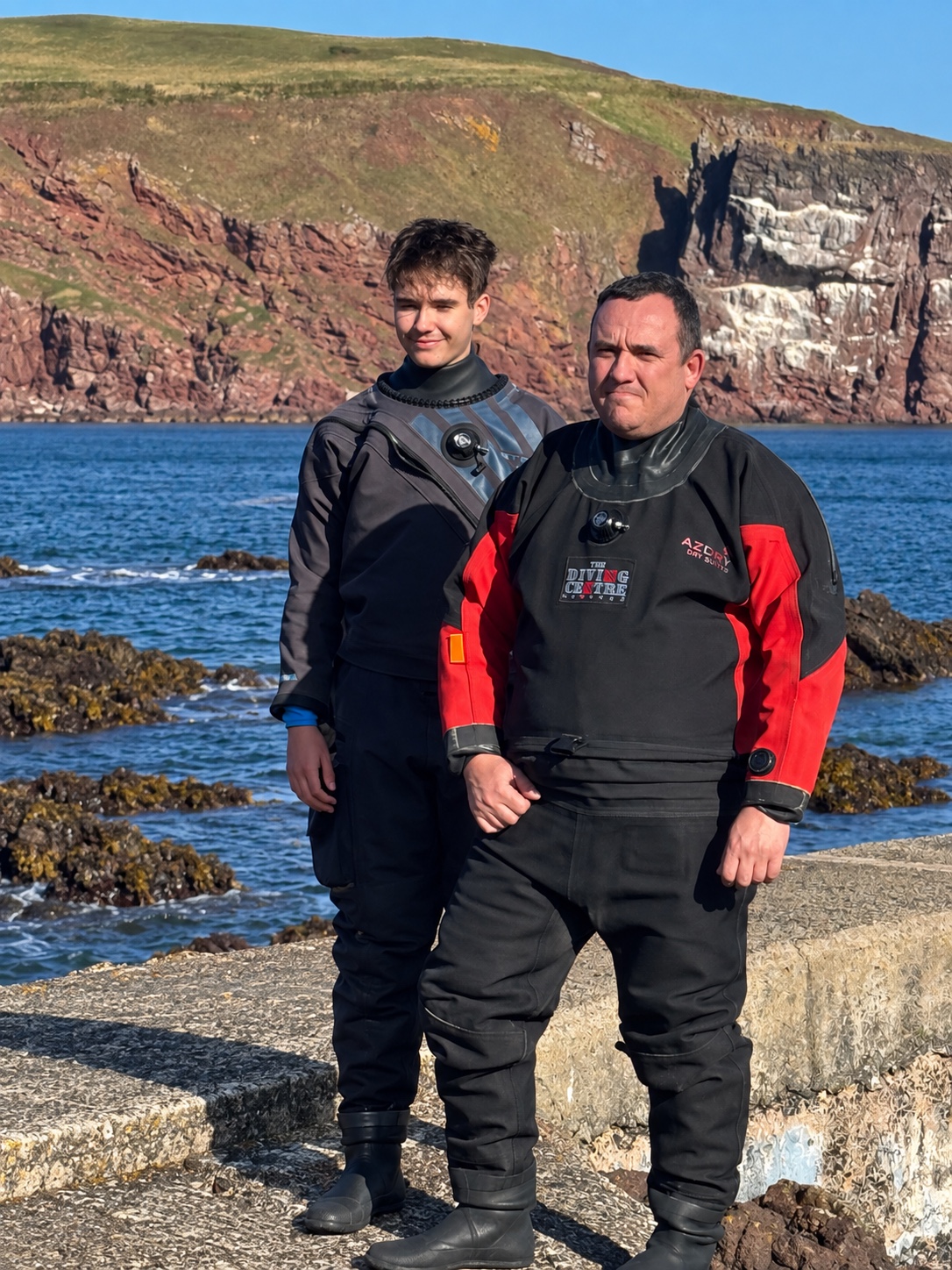
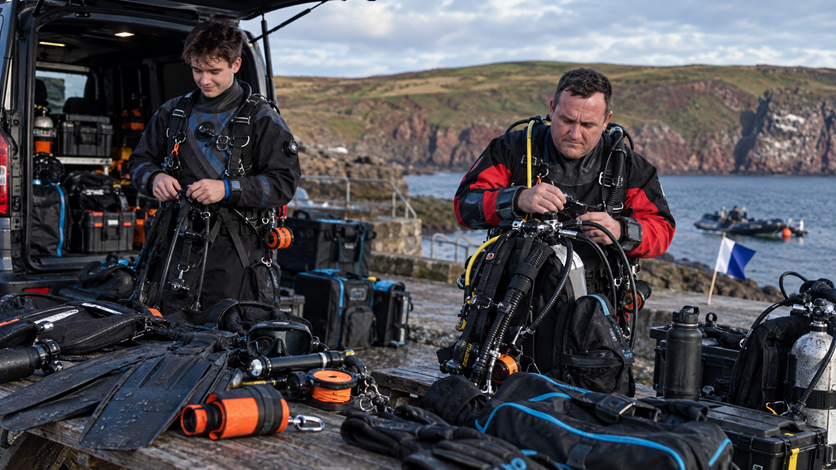
    Martin and Matthew prepared for UK drysuit diving
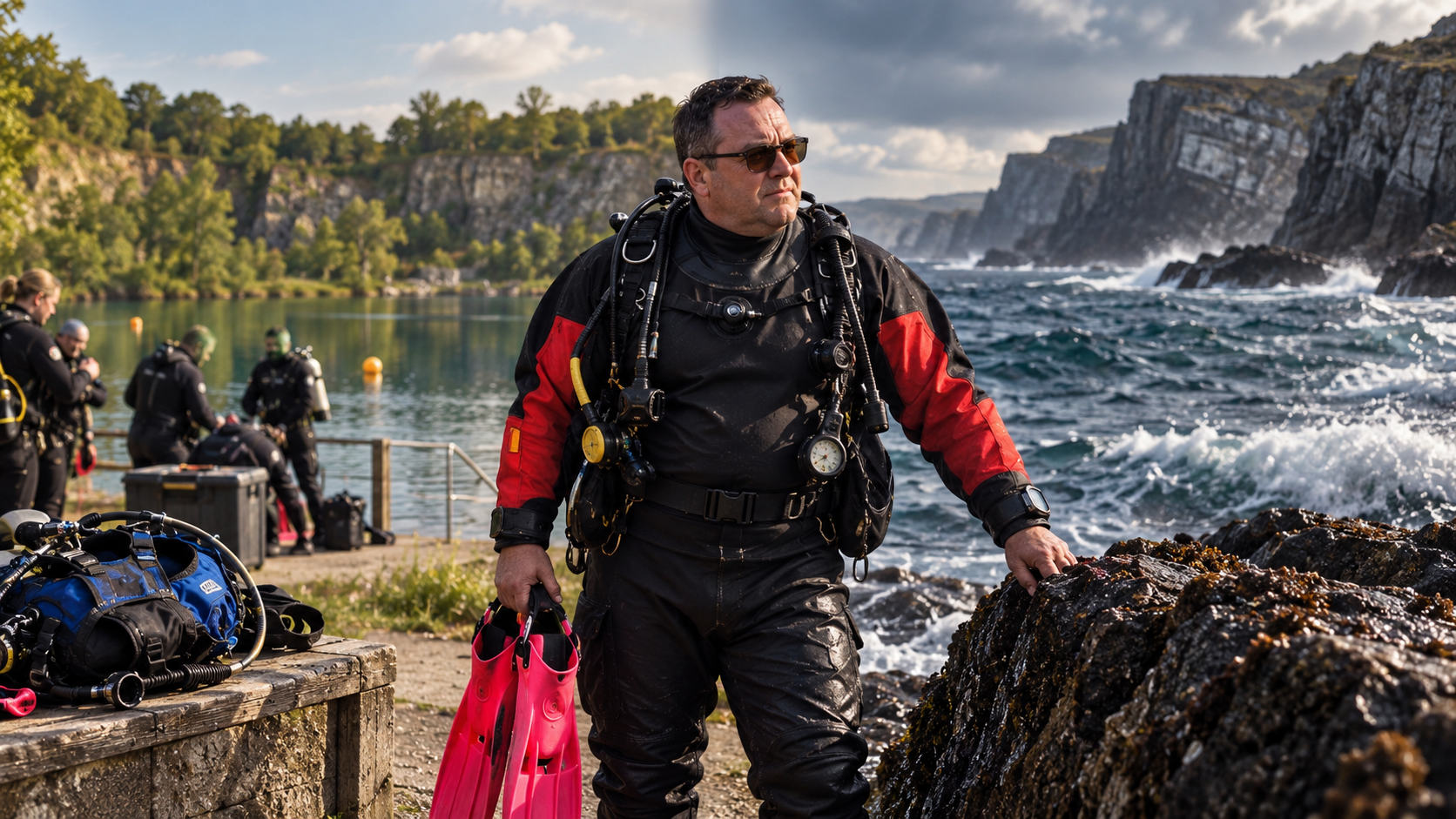
    UK sea diving adds the environment itself to the workload: exposure protection, entries, exits and changing conditions.

    Inland sites expose the basics

    When the environment is relatively controlled, it becomes harder to blame the conditions for untidy fundamentals.

    Buoyancy, trim, shutdown practice, DSMB work, finning, weighting and general configuration can all be repeated with fewer distractions.

    That makes inland diving a very good workshop.

    The sea makes the whole dive matter

    Coastal diving adds a different layer.

    Weather, swell, current, entry and exit, boat movement, slippery rocks, visibility and changing conditions can all matter before I even get to the underwater part.

    St Abbs reinforced that for me. The dive itself can be lovely while the shore exit reminds you very quickly that the day does not end at the safety stop.

    Natural navigation feels different

    The sea has also made me pay more attention to natural navigation.

    At St Abbs I remember using the rock formation as a reference and thinking about the relationship between the coastline and direction rather than simply following a fixed quarry feature.

    That kind of navigation feels more connected to the environment.

    The sea teaches energy management

    One of the biggest differences for me is energy.

    A long carry, awkward entry, waves, a ladder or a shore exit can eat into the same physical and mental reserve I need underwater.

    That links directly to the human-factors side of diving: pre-dive faff and physical workload are not separate from the dive just because they happen above the water.

    I want both in my training

    If I only dived quarries, I would miss the environmental judgement and adaptability the sea demands.

    If I only dived the sea, I would lose one of the easiest places to repeat skills deliberately without every session being dictated by conditions.

    For where I am heading—Divemaster development, sidemount and eventually more technical diving—I want both.

    The quarry gives me repetition.

    The sea gives me variability.

    Both expose weaknesses, just in different ways.

    One lets me sharpen the tool. The other makes me use it.

  • The Pre-Dive Faff Factor: How Small Hassles Steal Energy Before the Dive

    The Pre-Dive Faff Factor: How Small Hassles Steal Energy Before the Dive

    Human Factors • UK Diving • Pre-Dive Preparation

    The Pre-Dive Faff Factor: How Small Hassles Steal Energy Before the Dive

    Sometimes the dive starts going wrong long before anybody gets wet.

    I have started thinking of it as the pre-dive faff factor.

    None of it is dramatic.

    An early alarm.

    A long drive.

    A heavy cylinder.

    Something left in the wrong bag.

    Boots refusing to cooperate.

    Somebody asking where the spare reel is.

    Walking what feels like half a county carrying a fully assembled UK dive setup.

    By itself, none of that is a problem.

    But stack enough little annoyances together and you can arrive at the water already tired, warm, irritated and mentally busy.

    Task loading does not begin at depth. Sometimes it begins in the car park.

    A UK dive day can start very early

    A lot of my UK diving involves a two-to-two-and-a-half-hour drive before I even reach the site.

    That often means an early start.

    Then there is unloading.

    Cylinder.

    Wing.

    Exposure suit.

    Weights.

    Fins.

    Regulators.

    Lights.

    Bags.

    The bits that somehow multiply every time you look away.

    Even if the dive itself is straightforward, the logistics can already be taking a bite out of the energy budget.

    The 600-metre lesson

    One of the most obvious examples for me was walking around 600 metres carrying dive equipment.

    There is a part of diving culture that can sometimes treat unnecessary suffering as if it is evidence of commitment.

    Personally, I would rather save the effort for the actual dive.

    That is why I bought a gear trolley.

    It is not glamorous.

    It is not technical.

    It is a set of wheels.

    But if those wheels save me from burning a chunk of my energy before I reach the water, they have done something useful.

    Carrying more than you need to prove that you can is not the same as preparing well.

    Heavy kit changes the whole morning

    UK diving kit is not subtle.

    A steel cylinder can still weigh around 14 kg when empty.

    Add a backplate, wing, regulators, ballast, drysuit, boots and everything else and suddenly you are moving around with the equivalent of an extra child attached to your back and hips.

    That matters before the dive.

    It matters on the walk in.

    It matters while standing around waiting.

    It matters at the entry.

    And it definitely matters when you are trying to get back out over rocks in a swell.

    Energy management is part of dive planning whether we call it that or not.

    Donning slowly is faster

    Drysuit diving taught me that rushing the process is usually a false economy.

    Donning and doffing a drysuit is something I prefer to do slowly and steadily.

    Heavy undersuits can make movement awkward.

    Rental suits can make fin donning feel like an Olympic flexibility event.

    Gloves, seals, zips, boots and hoses all become harder to manage if I am already hot and trying to hurry.

    Slowing down usually gets me ready quicker because I am not correcting mistakes created by rushing.

    Slow is smooth. Smooth is usually quicker than fixing something you rushed.

    Being too warm is task loading too

    I naturally run warm.

    That means I can be stood around in cold-water equipment feeling like I am slowly cooking while waiting to enter the water.

    Then I get underwater and my body and hands are wonderfully warm while my face feels as though somebody has pressed it against a freezer.

    UK diving has a sense of humour.

    The point is that thermal comfort is not only an underwater issue.

    Overheating while kitting up can leave you tired and irritated before the dive starts.

    For me, that is another reason not to automatically reach for the thickest possible undersuit.

    More insulation is not useful if it makes the whole preparation process harder than it needs to be.

    Organisation beats memory

    I do not want to rely on remembering where I put something while everyone is standing around waiting.

    The more I dive, the more I want equipment to have a predictable place.

    That applies underwater and on land.

    If I know which bag contains the spare mask, where the DSMB is, which pocket the backup spool lives in, and where the batteries are, I am not spending mental effort searching.

    The same principle that makes my BP/W feel cleaner underwater makes the dive day calmer on the surface.

    The less I have to search for, remember or improvise, the more capacity I keep for the dive.

    Bring what the dive actually needs

    One of the biggest changes in my equipment thinking has been moving away from carrying everything because I own it.

    If I am doing a daytime lobster dive, I do not need the same light redundancy I would take at night.

    If I am not doing a survey, I probably do not need a giant slate.

    If a piece of kit serves no purpose on that dive, carrying it can create more faff than benefit.

    This does not mean cutting safety equipment.

    It means making the equipment list deliberate.

    Required.

    Useful.

    Backup.

    Or staying in the bag.

    Pool testing saves open-water faff

    Hiring the five-metre pool to test our XDEEP ZENs was one of the better equipment decisions Gemma and I made.

    It cost about £50.

    For that, we got a controlled environment where we could adjust harnesses, check trim, practise skills and learn the rigs without adding current, waves, cold or a difficult exit.

    That kind of shakedown removes uncertainty.

    If I can discover that something rubs, moves or sits badly in a pool, that is one less problem waiting for me on the actual dive.

    If possible, I also like the idea of sticking a camera on the pool wall and recording the session.

    What feels perfectly horizontal may look rather more interpretive-dance when viewed afterwards.

    The entry should be part of the plan

    My St Abbs drysuit dives reinforced that the entry and exit are not just the bits before and after the “real” dive.

    They are part of the dive.

    A straightforward boat entry is very different from walking fully equipped over uneven ground.

    A calm ladder exit is very different from a rocky shore with a one-to-two metre swell.

    I much prefer boat diving.

    To be fair, I prefer boat diving in tropical water too, so this is hardly a surprising revelation.

    But whatever the site, I now want to understand how I am getting in and how I am getting back out before I start the dive.

    And plan the exit while you still feel fresh

    The exit can easily be the physically hardest part of a UK shore dive.

    You are carrying the same equipment you entered with.

    But now you may be tired.

    The cylinder may be lighter, but you are not necessarily feeling lighter.

    If the upper rocks are safe and stable, removing dumpable weight before completing the climb can make a big difference.

    That is not cheating.

    It is using the equipment as designed.

    The goal is to get everybody out safely, not preserve the artistic purity of your complete kit configuration until you reach the car.

    Helpful people can accidentally create more faff

    At St Abbs, someone tried to help me out of the water by grabbing the corrugated inflator hose on my wing.

    The hose disconnected.

    I went back underwater.

    The wing filled with water.

    Not ideal.

    But the lesson was not that nobody should help me.

    The lesson was that assistance works better when everybody understands the equipment.

    Afterwards, while repairing it, I explained that the cylinder valve or shoulder straps were safer places to get hold of me.

    I thanked him for trying.

    No drama required.

    A buddy can remove faff too

    Diving regularly with Gemma has advantages that have nothing to do with romance.

    We know each other’s equipment.

    We know roughly where things live.

    We know how we normally position ourselves.

    We know what “something feels off” looks like in each other.

    And occasionally she needs me to retrieve the crotch strap on her BP/W.

    That familiarity removes little bits of uncertainty.

    When Matthew dives with us, we can give him a predictable place in the team too.

    Predictability is underrated.

    The pre-dive checklist I am moving towards

    I am increasingly trying to make the preparation stage answer a few simple questions.

    • Am I rested enough for the dive I am planning?
    • Do I actually need everything I am carrying?
    • Is my equipment where I expect it to be?
    • Have I tested anything new before relying on it?
    • Am I correctly weighted for this configuration?
    • Do I understand the entry?
    • Do I understand the exit?
    • Is there an easier way to move the equipment to the water?
    • Does my buddy understand anything unusual about my setup?
    • Am I already tired, overheated or irritated?

    That last question may be the most important.

    Because sometimes the answer is not another equipment adjustment.

    Sometimes the answer is:

    Sit down.

    Drink something.

    Cool off.

    Stop rushing.

    Faff is a human-factors problem

    It is tempting to treat all of this as convenience.

    Nice-to-have organisation.

    Better bags.

    A trolley.

    Cleaner equipment.

    But I increasingly see it as human factors.

    Every unnecessary problem I solve on land consumes attention, patience or physical energy.

    If I arrive at the water already at 80% capacity, I have less left when something genuinely unexpected happens underwater.

    Good preparation is not about making the dive perfect. It is about keeping enough capacity for when it isn’t.

    Final thought

    I do not think the goal is to remove every bit of pre-dive faff.

    This is scuba diving.

    There will always be a hose that has somehow tied itself around something impossible.

    Somebody will forget where they put their mask.

    A glove will disappear.

    Britain will provide weather.

    The goal is to stop creating unnecessary problems for ourselves.

    Move the kit sensibly.

    Organise it.

    Test new configurations somewhere easy.

    Know the entry and exit.

    Bring what the dive needs.

    And arrive at the water with enough energy left to actually enjoy being there.

    Spend less energy on the faff so you have more left for the dive.

  • Task Loading: The Quiet Thing That Can Ruin a Dive

    Task Loading: The Quiet Thing That Can Ruin a Dive

    Human Factors • Task Loading • Dive Safety

    Task Loading: The Quiet Thing That Can Ruin a Dive

    Most dives do not suddenly become complicated. They become complicated one small thing at a time.

    Task loading is one of those diving phrases that sounds more complicated than the idea actually is.

    Put simply, it is what happens when too many things are demanding your attention at the same time.

    The important bit is that none of those things has to be particularly difficult on its own.

    Check gas.

    Watch your buddy.

    Hold depth.

    Navigate.

    Control buoyancy.

    Deal with cold.

    Sort a torch.

    Remember where the exit is.

    Keep an eye on your computer.

    Any one of those is manageable.

    Stack enough of them together and suddenly a diver who was perfectly capable five minutes ago starts making poor decisions.

    Task loading is rarely one big problem. It is lots of small problems all asking for attention at the same time.

    It often starts before the dive

    One thing I have become much more aware of is that task loading does not begin when I descend.

    It can begin hours earlier.

    An early alarm.

    A two-to-two-and-a-half-hour drive.

    Loading cylinders and kit.

    Walking hundreds of metres carrying equipment.

    Getting changed.

    Realising something is in the wrong bag.

    Someone else waiting for you.

    Weather getting worse.

    None of that is underwater yet, but all of it is already using energy and attention.

    That is one reason I bought a gear trolley.

    Carrying a full UK setup for 600 metres before the dive does not make me tougher.

    It just uses energy I would rather have available when I actually need it.

    Equipment can either add load or remove it

    My move to a backplate-and-wing changed how I think about equipment.

    In my earlier setup, if I managed to get horizontal, I could still have a slate, compass, knife, torch, beacon, magnetic clips, several spools, DSMBs and a large console hanging below me.

    Every dangling item was another thing that could move, snag, disappear behind me or need finding.

    I gradually moved towards giving everything a home.

    Routine-use equipment in one pocket.

    Emergency kit in the other.

    Backup torch clipped where I expect it.

    Nothing hanging because I could not decide where else to put it.

    The biggest compliment I can give my XDEEP ZEN is that once I am underwater, I tend to forget it exists.

    Gear that disappears into the background gives your brain somewhere else to spend its attention.

    Overweighting gave me a very literal lesson

    My first open-water drysuit dive gave me one of the clearest examples of task loading I have experienced.

    Including my backplate, I had been given around 19 kg.

    I now know that, depending on the suit, I am generally happier somewhere around 11–14 kg.

    That extra weight did not just mean carrying more lead.

    It meant carrying more gas in the suit to compensate.

    More gas meant a bigger moving bubble.

    A bigger bubble meant more attention needed for trim and buoyancy.

    Holding a two-minute hover at around 11 metres became much harder than it needed to be.

    The lesson was not simply:

    “Too much weight is bad.”

    It was:

    One setup mistake can quietly create several extra jobs for you underwater.

    Then the exit added another layer

    After that dive came the St Abbs exit.

    Rocky shore.

    One-to-two metre swell.

    Heavy steel cylinder.

    Ballast.

    Drysuit.

    Wing.

    Tired legs.

    Someone tried to help and grabbed the corrugated inflator hose on my XDEEP wing.

    The hose came off.

    I went back underwater and surfaced with a wing full of North Sea.

    At that point I was no longer dealing with one problem.

    I was dealing with fatigue, unstable footing, swell, heavy equipment and now a compromised wing.

    That is what stacking looks like.

    It does not require panic.

    It just requires the available mental and physical capacity to keep shrinking.

    Deep diving makes the budget visible

    Deep Diver showed me task loading in a different way.

    At 40 metres, I personally did not notice any obvious narcosis.

    The instructor could not see a difference in my example tasks either.

    But I could absolutely see the gas needle moving.

    I am a greedy breather.

    At that depth, gas use became very visible.

    So I was consciously avoiding wasted movement, checking which gas I was breathing, monitoring depth and watching the NDL disappear surprisingly quickly across repeated deep dives.

    None of those jobs was difficult by itself.

    But they all had to happen.

    That is one reason deeper diving feels different even when you feel calm.

    You have fewer spare resources.

    Forty metres also taught me something slightly embarrassing

    Depth itself can be quite boring.

    I remember hovering calmly, looking up at fish above me, out into the deep blue and down into the nothing as the wall continued beneath us.

    It was beautiful.

    But I also remember thinking:

    Why am I actually down here?

    The dive was costing me more gas, more NDL and more attention purely because of depth.

    That changed how I think about deep diving.

    If depth adds task loading, I want there to be an actual reason for accepting the cost.

    A wreck feature.

    A swim-through.

    Marine life.

    A training objective.

    Something.

    Forty metres simply because the computer says forty is not particularly interesting to me.

    Night diving did the opposite

    This is where task loading gets interesting.

    You would expect night diving to increase it.

    Darkness.

    Lights.

    Different communication.

    Reduced visibility.

    Different navigation cues.

    Yet for me, night diving often feels calmer.

    My world becomes the torch beam, my buddy, my instruments and the next few metres.

    The visual clutter disappears.

    Instead of trying to absorb an entire reef, I am dealing with a smaller bubble of information.

    That suits my brain.

    Night diving did not feel like having less information. It felt like having fewer distractions.

    But only if the kit is right

    Night diving also shows why redundancy has to be thought through beforehand.

    On a night dive, I take a primary light and two strong backups.

    If my primary fails, I do not want the failure itself to create a huge new decision-making problem.

    I know where the backup is.

    I know how to reach it.

    I know I still have another reserve.

    That reduces the mental cost of the failure.

    On a daytime lobster dive, I may only carry one light because losing it does not affect my ability to safely complete the dive.

    Redundancy is not just about carrying more.

    It is about making failures easier to manage.

    A calm buddy reduces load too

    Rescue Diver changed the way I look at other divers.

    I am more willing now to approach somebody who looks uncomfortable and simply ask:

    Hey there, how are you doing?

    I may misread somebody.

    They may be absolutely fine.

    But early communication is cheap.

    Waiting until somebody is visibly overwhelmed is expensive.

    A buddy team should reduce task loading for each other, not add to it.

    That means watching each other, keeping predictable positioning and solving small problems early.

    Team positioning helps

    Gemma and I tend to dive fairly close together.

    One of us leads and the other is slightly offset, around a metre away.

    When Matthew is with us, he takes the opposite side and we form a shallow V.

    It is not some grand tactical formation.

    It is simply easy to understand.

    I know roughly where they should be.

    They know roughly where I should be.

    If somebody is suddenly not there, that change becomes obvious.

    Predictability reduces the amount of active checking needed.

    Good habits should become boring

    I increasingly think one of the goals of training is to make important things boring.

    Checking gas.

    Knowing where the backup torch is.

    Finding the DSMB.

    Reaching the dump valve.

    Looking for your buddy.

    Holding trim.

    These things should not require a committee meeting inside my head.

    The more automatic the basics become, the more spare capacity I have when something genuinely unusual happens.

    That is also why I like practising equipment changes in a pool.

    I would rather discover how something behaves when nothing else matters.

    My warning signs for rising task loading

    I am still learning to recognise this in myself, but there are a few things I pay attention to.

    • I start making larger buoyancy corrections instead of small ones.
    • I stop noticing scenery because I am concentrating on equipment.
    • I repeatedly check the same instrument because I did not properly process the information the first time.
    • I become less aware of where my buddy is.
    • I feel rushed even when nobody is actually rushing me.
    • Simple tasks suddenly feel irritating.
    • I realise I am reacting rather than thinking ahead.

    None of those automatically means the dive must end.

    They mean I should notice what is happening.

    This is where Stop. Think. Assess fits

    Task loading is exactly why I like the Stop. Think. Assess framework.

    When the mental workload starts climbing, the instinct can be to move faster.

    Fix everything.

    Catch up.

    Continue.

    Sometimes the better response is the opposite.

    Stop.

    Stabilise.

    Work out which problem actually matters.

    Deal with that one.

    Pause.

    Reassess.

    When everything feels important, the first job is often deciding what is actually important.

    Final thought

    Task loading is dangerous partly because it does not always feel dramatic.

    You may simply feel busy.

    Slightly rushed.

    Slightly uncomfortable.

    Slightly behind the dive.

    And then another small thing happens.

    The goal for me is not to eliminate task loading.

    Diving will always require us to manage several things at once.

    The goal is to stop wasting capacity on problems I could have removed earlier.

    Better weighting.

    Cleaner equipment.

    Predictable buddy positioning.

    Proper redundancy.

    Enough rest.

    Slower decisions.

    And the willingness to stop when the stack starts getting too high.

    The safest spare capacity is the capacity you never wasted in the first place.
  • Holiday Diving vs UK Diving: What Each Has Taught Me

    Holiday Diving vs UK Diving: What Each Has Taught Me

    Diver Background • UK Diving • Red Sea

    Holiday Diving vs UK Diving: What Each Has Taught Me

    I started diving in the Red Sea, but UK diving has taught me a very different kind of lesson.

    I started diving in the Red Sea.

    That probably shaped me more than I realised at the time. Warm water, clear visibility,
    colour everywhere, fish everywhere, and that ridiculous feeling of dropping below the surface
    and suddenly being somewhere completely different.

    It is the sort of diving that makes you understand very quickly why people get hooked.

    Then I came back to the UK and did my Advanced Open Water inland at Capernwray.

    Different world. Different pace. Different lessons.

    The Red Sea gave me the magic

    Holiday diving can feel almost unfairly beautiful.

    The Red Sea gives you warmth, light, colour, visibility and marine life in a way that is very
    easy to fall in love with. It is the version of diving that looks like the posters. Blue water,
    coral, fish, sunshine, and that strange quiet that appears once your head goes below the surface.

    For me, that first experience mattered because it gave scuba an emotional hook. It was not just
    a sport or a training pathway. It was a doorway into a world I wanted to keep visiting.

    It also made diving feel possible. I could experience the underwater world, move through it, see
    things I had only seen in aquariums or documentaries, and feel that strong pull to do more.

    Holiday diving gave me the wonder.

    Capernwray gave me structure

    Capernwray was a very different kind of diving.

    It was inland UK diving, not warm-water holiday diving. Less coral reef magic, more controlled
    training site. Less tropical colour, more structure, briefings, skills, checks, procedures and
    repetition.

    That was exactly what I needed for Advanced Open Water.

    AOW at Capernwray gave me a more deliberate training environment. It made the diving less about
    simply enjoying the underwater world and more about developing as a diver. Buoyancy, awareness,
    task focus, navigation, depth, buddy work and the rhythm of a proper training day all started to
    matter more.

    It was not better than the Red Sea. It was different.

    The Red Sea had shown me why I wanted to dive. Capernwray started showing me how to become better
    at it.

    The North East coast made it real

    Rescue took the contrast even further.

    Doing Rescue on the North East coast, in North Sea conditions, gave the training a different weight.
    It was not just about performing skills in a neat, tidy way. It was about thinking about the site,
    the surface, the exit, the cold, the conditions, tired divers, stress signals, and what happens when
    a normal dive starts to unravel.

    UK sea diving has a realism to it. Weather matters. Temperature matters. Visibility matters. Getting
    in and out matters. Kit choices matter. Timing matters. Communication matters.

    Rescue in that setting made me think more seriously about the whole dive, not just the underwater
    bit.

    That is where UK diving started to feel less like a substitute for holiday diving and more like a
    powerful training ground in its own right.

    What holiday diving gives me

    I do not see holiday diving as “easy mode” in a dismissive way. That would be unfair.

    Holiday diving gives a lot. Warmth reduces one kind of task loading. Better visibility can make
    navigation, buddy awareness and marine-life observation feel more natural. Repeated dives over a trip
    can build rhythm and confidence. Boat routines, guided dives and relaxed conditions can help you enjoy
    diving without every moment being shaped by cold-water logistics.

    It also gives something that should not be underrated: joy.

    Seeing reefs, fish, wrecks, light, colour and open blue water is not a soft or silly part of diving.
    It is part of why many of us started. It is part of why we keep coming back.

    Holiday diving reminds me what I love about scuba.

    What UK diving gives me

    UK diving gives me something different.

    It gives me discipline. It gives me preparation. It makes kit organisation matter. It makes thermal
    protection matter. It makes weighting matter. It makes “I’ll sort it when I get there” feel like a
    poor life choice wearing fins.

    Cold water, lower visibility, drysuit use, shore or quarry logistics, changing weather and heavier kit
    all add load. That does not make UK diving worse. It means UK diving teaches different lessons.

    It teaches patience. It teaches planning. It teaches honesty about comfort and capacity. It teaches
    you to notice when small things are starting to stack up.

    In other words, UK diving is very good at showing you what kind of diver you really are when the easy
    parts are removed.

    The trap is thinking one is “real” and the other is not

    I do not like the idea that one type of diving is the “proper” version and the other is somehow lesser.

    Warm-water holiday diving can still demand good buoyancy, awareness, gas discipline, buddy skills and
    respect for the environment. Clear water does not remove the need for judgement.

    UK diving can be challenging and skill-building, but it is not automatically superior just because it
    is colder, darker or more awkward. Suffering is not a qualification.

    They are different environments with different lessons.

    The mistake would be to treat holiday diving as mindless fun or UK diving as miserable character
    building. Both can be valuable. Both can teach. Both can expose weak habits. Both can give brilliant
    dives.

    Why the contrast matters for me

    The contrast matters because it has shaped my pathway.

    The Red Sea gave me the emotional start. Capernwray gave me structured inland training. The North East
    coast gave Rescue a real-world edge. Together, they have created a much more rounded picture of what
    diving can be.

    That is useful as I look ahead.

    I want more UK sea time. I want more drysuit practice. I want more comfort in colder, lower-visibility
    conditions. I want to continue building the sort of habits that will make future trips, including the
    Red Sea, more enjoyable and safer.

    I do not want warm-water dives to become an escape from skill-building. I want them to become a place
    where good habits show up more easily because they have already been trained elsewhere.

    Cold water skills, warm water rewards

    If I had to summarise it simply, I would say this:

    Holiday diving reminds me why I fell in love with scuba. UK diving teaches me how to become the diver I want to be.

    That does not mean every UK dive has to be a grim lesson in character and every holiday dive has to be
    pure relaxation. There is overlap. There is joy in UK diving and discipline in holiday diving.

    But the balance is useful.

    One gives me wonder. The other gives me grit. One gives colour and comfort. The other gives preparation
    and resilience. One makes me want to dive. The other makes me want to dive better.

    Final thought

    I started in the Red Sea, and I am glad I did.

    It gave me the magic first.

    But coming back to the UK, doing Advanced Open Water at Capernwray, and later doing Rescue on the North
    East coast, gave me something else: structure, realism, and a clearer sense of the diver I want to become.

    I do not want holiday diving instead of UK diving, or UK diving instead of holiday diving.

    I want both.

    Wonder gets you started. Discipline keeps you growing.