Tools • Equipment • Organisation
How I Track Cylinders, Gas and Kit
Once the cylinder collection reached sixteen, “I’m sure that one is in test” stopped being an acceptable database.
Sixteen cylinders is enough to need a system
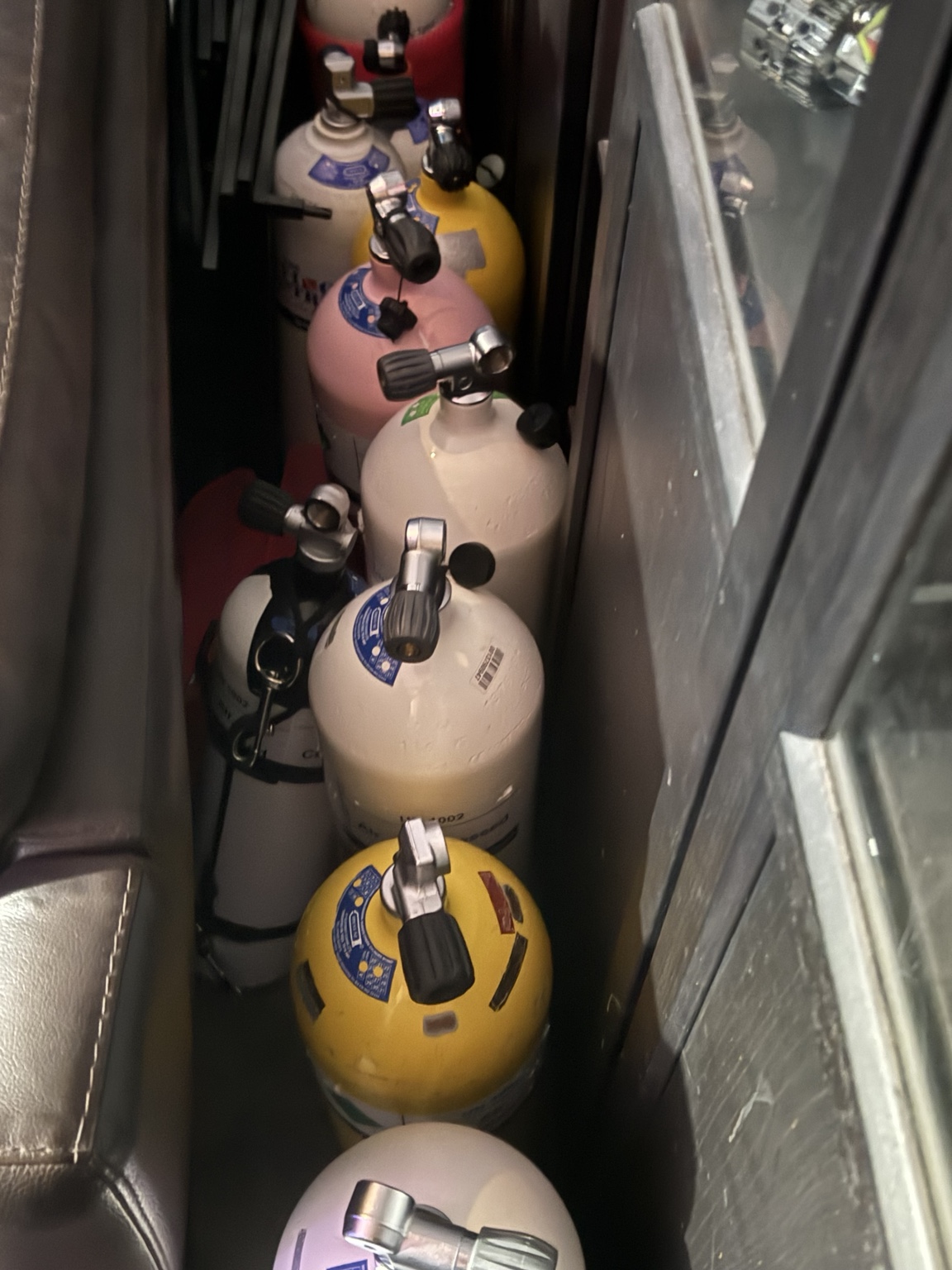
I currently have sixteen cylinders in the wider kit pool.
That sounds faintly ridiculous when written down, but different sizes and uses accumulate surprisingly quickly once diving expands beyond one recreational single cylinder.
The problem is that every physical cylinder comes with information that matters: what it is, what gas is in it, when it was filled, whether it has a current analysis, when its test is due and whether O2-clean status matters for how I intend to use it.
At that point memory is not a system.
If I have to stare at a cylinder and think “I’m pretty sure…”, the tracking has already failed.
Every cylinder gets an identity
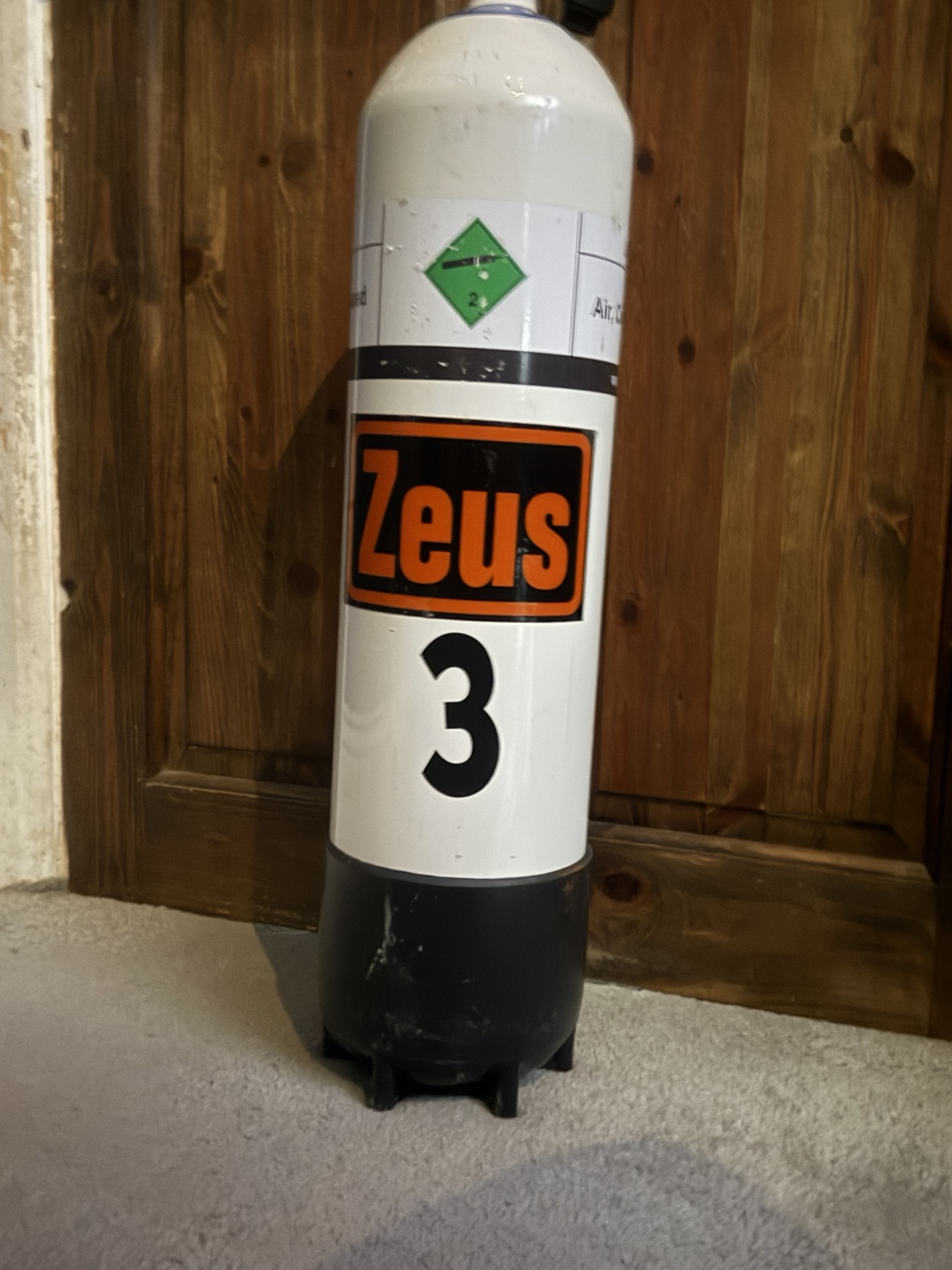
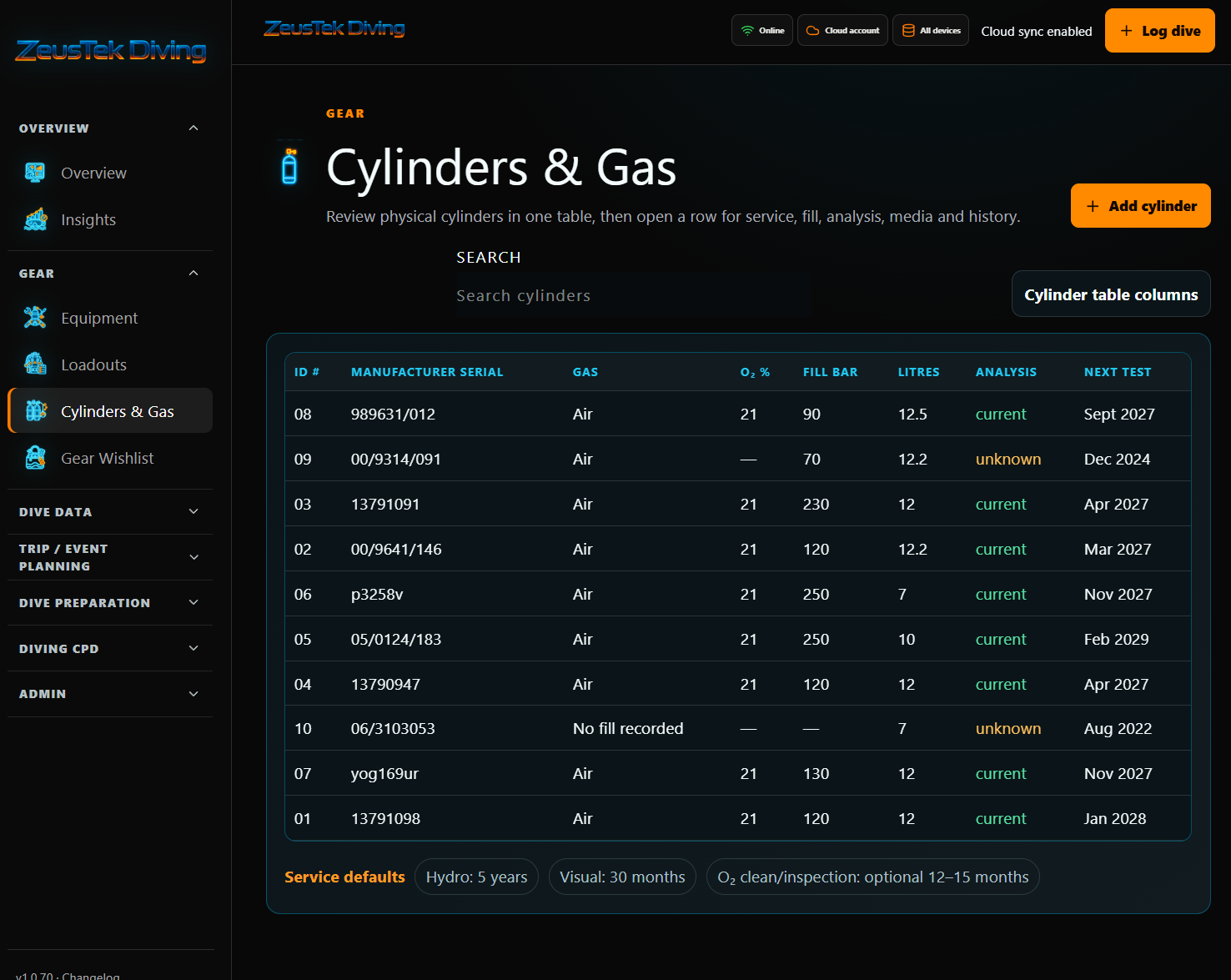
I am moving toward treating each cylinder as its own record rather than just “one of the 12s”.
An ID label gives me something simple to connect the physical object to the digital record.
That means the app can hold the manufacturer serial, capacity, current gas and service information without me trying to decode a row of nearly identical steel cylinders in the garage.
Gas is a current state, not a permanent property
A cylinder is not “the Nitrox one” forever.
What matters is what is actually in it now.
So the useful fields for me include gas type, oxygen percentage where relevant, fill pressure and whether the analysis is current.
The point is not to replace proper gas analysis or labels. The digital record is there to support the physical process, not pretend it happened.
Service dates are where software earns its keep
Hydro, visual inspection and O2-clean status are exactly the sort of things that are easy to remember until suddenly they are not.
With a couple of cylinders, a mental note might survive.
With sixteen, I want the system to show me what is coming due rather than discovering it when I am already trying to get something filled.
The same idea extends to the rest of the kit
Cylinders are the obvious case because they have formal test and gas information attached to them, but I am gradually using the same thinking across other equipment.
Regulator service history, loadouts, what belongs together and what is ready to go all become much easier when the information is in one place.
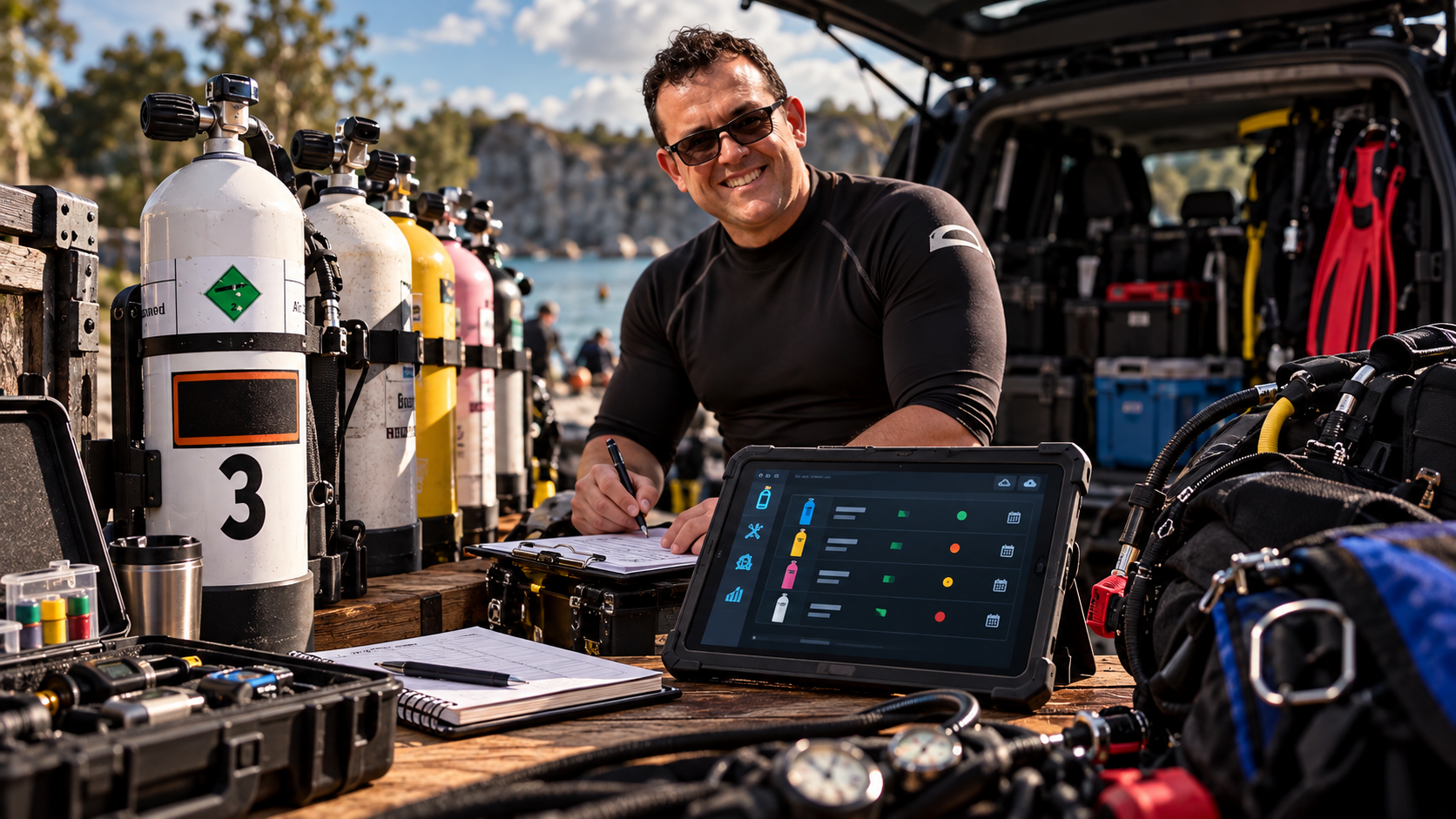
This is one of the reasons the ZeusTek Diving WPA app keeps growing. I am building it around the questions I repeatedly need answered.
I want less pre-dive faff, not more admin
The danger with any tracking system is that it becomes a hobby in its own right.
I do not want to spend twenty minutes entering data for every five minutes I spend actually diving.
The system has to save time overall.
If I can look at one screen and know which cylinders are in test, what gas they contain and what needs attention, then the admin has earned its place.
I like systems, but only when they reduce uncertainty.
Sixteen cylinders is enough equipment that I want facts, not memory and crossed fingers.
Good organisation should make the dive day feel simpler, not more complicated.