
Fitness • Real-World Diving • Diver Development
Strength Training for Scuba Divers: Why It Matters
I like being strong. Diving has shown me where that strength is genuinely useful — and where technique matters more.
Scuba is wonderfully weightless once you are underwater
One of the funny things about scuba is that the bit everybody photographs is often the easiest part physically.
Once I am neutrally buoyant and settled underwater, I want the whole thing to look almost lazy.
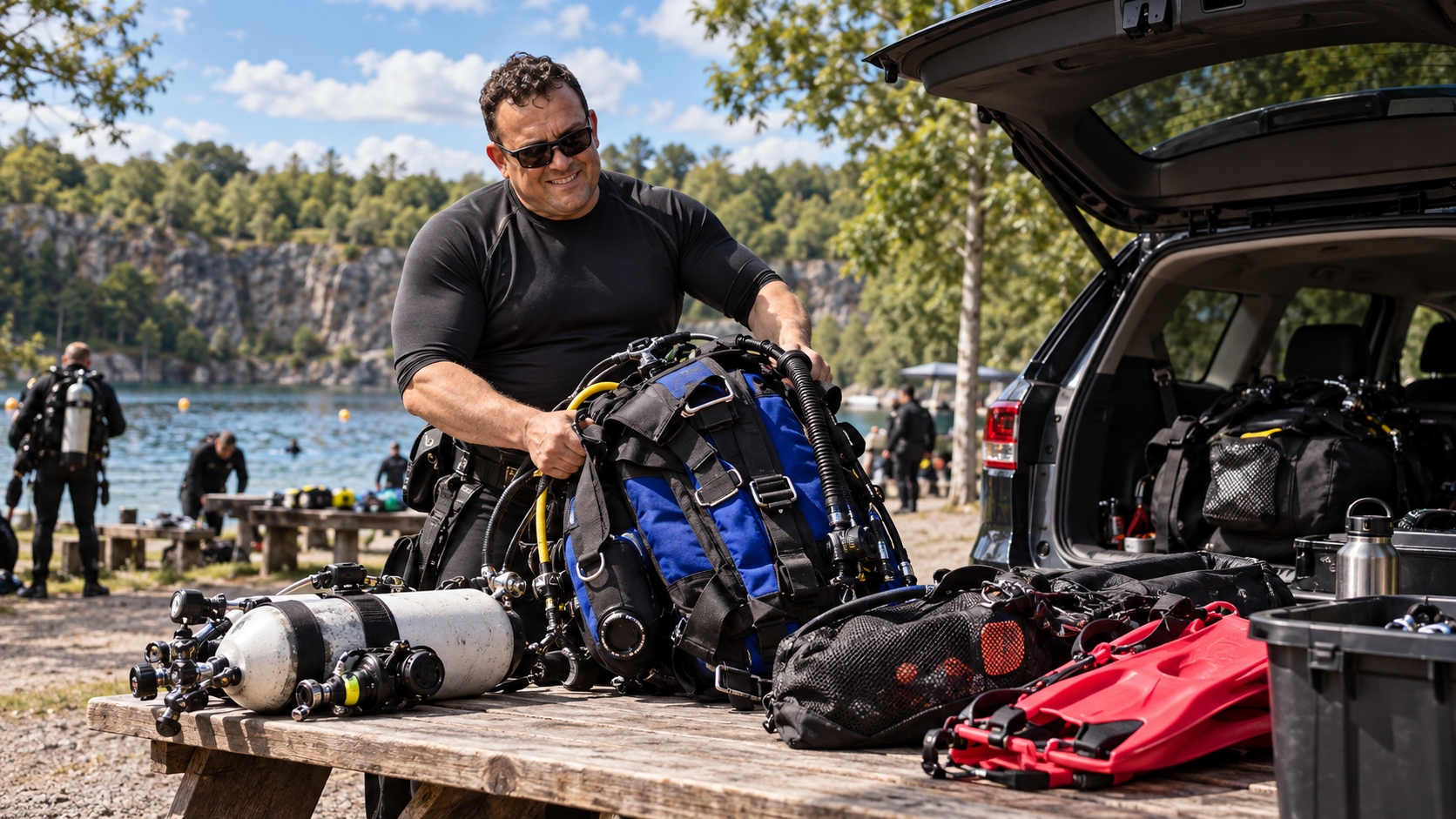
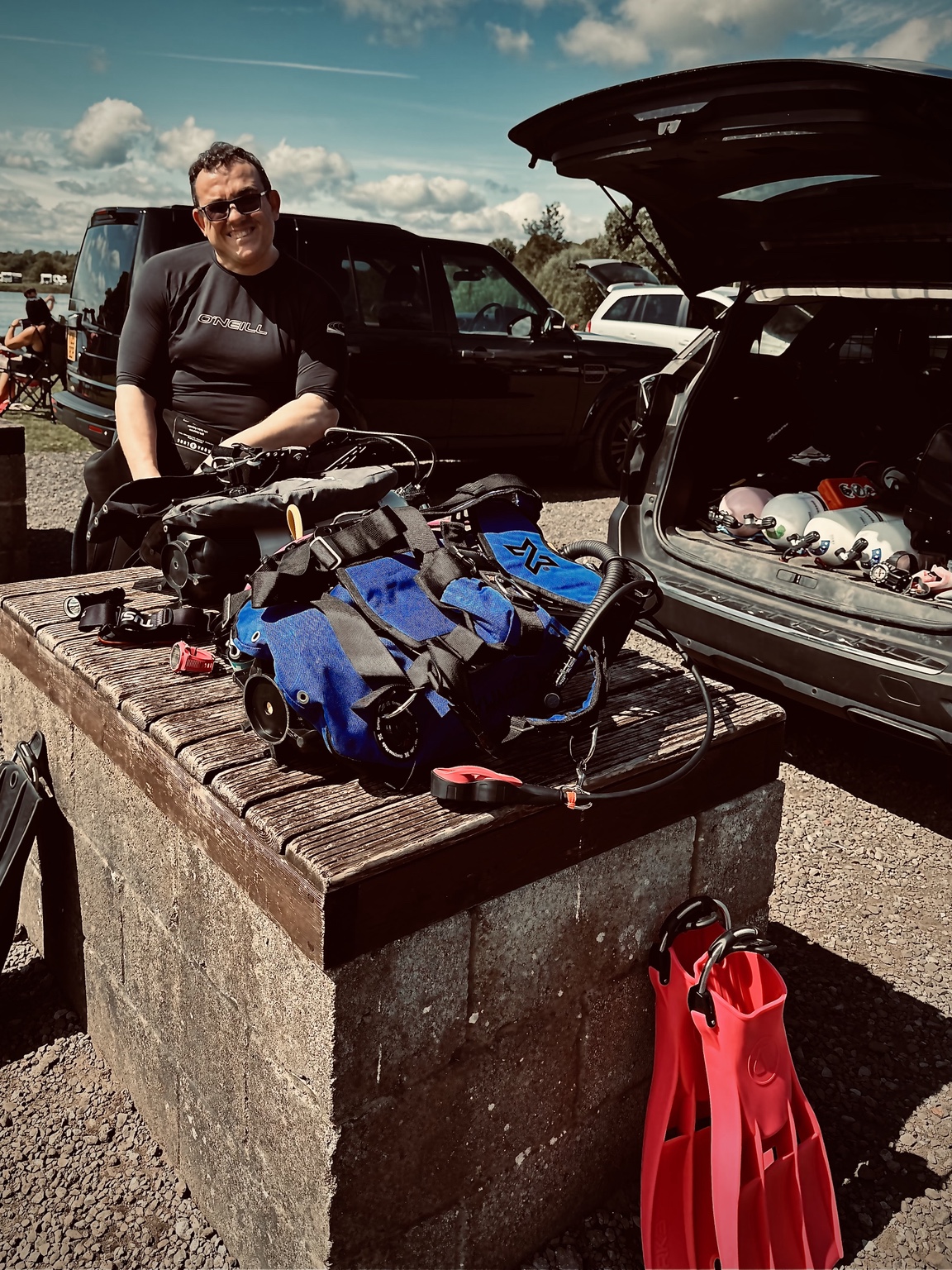
The hard work tends to happen before and after that: cylinders, bags, fins, drysuit, weights, ladders, boats, uneven ground and getting a fully kitted body from one place to another without wasting half the day’s energy.
Strength is most useful when it makes the logistics of diving less demanding, not when it makes me fight the water.
Being a big strong bloke has obvious advantages
I have always enjoyed strength training and I am naturally a big, heavyset bloke.
That is handy when something genuinely needs lifting or carrying.
A 12-litre steel cylinder does not become light because we call diving a recreational activity. Add a BCD or wing, regulators, weights and exposure protection and there is plenty of kit to move around before anybody gets wet.
Being stronger gives me more reserve for those jobs.
But brute force is a poor diving technique
The important bit is not confusing strength with skill.
Underwater, I do not want to muscle anything into place. I want trim, buoyancy and good positioning to do the work.
The same applies to rescue. Physical strength is useful, but good technique, leverage, positioning and calm problem-solving should come first.
I would much rather use strength as spare capacity than as the only reason a technique works.
Strength should be a reserve, not a substitute for technique.
Where I notice strength most
For me, the practical benefits show up in fairly ordinary places:
- moving cylinders and assembled kit;
- getting equipment on and off safely;
- shore entries and exits;
- boat ladders and awkward steps;
- carrying kit across a quarry or car park;
- helping a buddy with equipment;
- having more physical reserve when a day becomes longer than planned.
None of those are glamorous, but they all affect how much energy I have left for the actual dive.
Fitness is bigger than strength
I also do not want to pretend a big bench press solves everything.
Divemaster preparation is making that particularly obvious. Surface swimming, finning efficiency, cardiovascular endurance, mobility and simply being comfortable working for longer all matter.
My challenge is not to become stronger for the sake of chasing numbers. It is to turn the strength I already enjoy building into useful diving capacity while improving the areas that strength cannot cover.
The goal is to arrive at the water with energy left
A good strength programme for me is not really about looking like a strong diver.
It is about making the physical chores around diving feel routine.
If moving cylinders, climbing a ladder or helping with somebody else’s kit costs less of my available energy, I have more attention and reserve for the dive itself.
I like lifting heavy things in the gym. That is part of who I am.
But the diving payoff is much simpler: I want the kit to feel manageable, the entry to feel controlled and the water to be where I become relaxed.
Strong enough for the kit. Skilled enough not to need strength underwater.